NetEase (NASDAQ: NTES)’s e-learning unit, Youdao (有道) reduced its fundraising target to $116 million from $300 million IPO on October 15. Founded in 2006, Youdao provides online dictionaries, online classrooms and language courses, with 100 million monthly average users in China in the first half of 2019. The company set a price range of $15 to $18 for its American Depositary Shares (ADSs) and will be listed under the symbol “DAO”. // reuters | SEC
TikTok (by Bytedance) launched an education program in India on October 17, as the popular short-video app looks to expand its offering and assuage local authority in one of its biggest markets. TikTok has been working with Indian partners in the edtech sector ahead of the campaign launch. TikTok claims to have 200 million users in India, of which 120 million are active every month. // TechCrunch | FT
6th World Internet Conference (or “Wuzhen Summit”) opened in China’s Zhejiang Province (10/20-22). Executives from major tech companies from home and abroad such as Microsoft, Qualcomm, Alibaba Group and Huawei attended the conference. // xinhua | scmp
Cyber-security has been a hot space for investments and acquisitions. With Thoma Bravo buying Sophos Group for $3.8 billion this week, here is a roundup of selected corporate M&As happened since 2018.
Paypal (NASDAQ: PYPL) is becoming the first foreign payment platform to provide online payment services in China. The license is obtained by acquiring 70% of GoPay (国付宝). The transaction is approved by the People’s Bank of China (PBOC) on September 30. // Crunchbase | GoPay PR
Baidu (NASDAQ: BIDU) launched self-driving service Apollo Robotaxi for the general public in Changsha China on September 27. The initial fleet has 45 autonomous cars. // cnet | SCMP
Source: SCMP
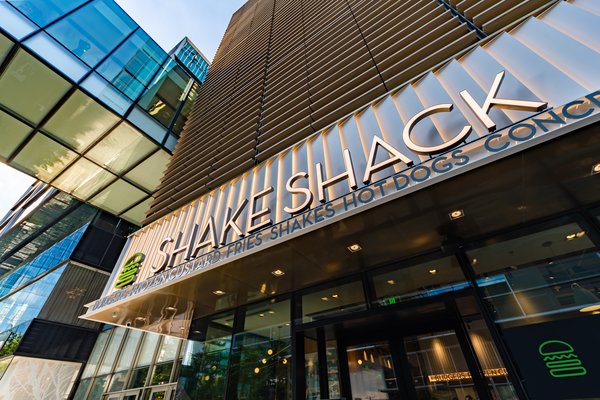
Shake Shack (NYSE: SHAK) opened its 2nd store at Kerry Center (嘉里中心) in Shanghai on September 26. Its first store in mainland China launched in January 2019 in Shanghai Xintiandi (新天地). // PR Newswire Asia | Jiemian
Source: prnasia
Xiaomi (HKSE: 1810) is entering the smart fridge segment (pricing starts at RMB 999) and completing its major appliance offerings comprised of TV, A/C, washing machines and fridges. Users can modify the temperature and mode of the cabin via voice control. Xiaomi has been trying to diversify from its smart phone business with smart home/IoT products. // gizmochina | 36kr
The first official meeting of the Libra Council is scheduled for October 14th in Geneva.
Dots to connect: future governance of cryptocurrency, possibility of a global cryptocurrency network run by companies, China can move into global crypto payments if supported/approved
5G is the buzzword that nearly every industry is talking about. Higher download speed, AR/VR, autonomous driving, industrial IoT – 5G is the future, powering the global economy over $12 trillion by 2035, according to an IHS study.
5G physics
Source: SlideplaySource: androidauthority.com
With 5G, we are marching into new radio frequencies, subdivided into Sub-6 (<6 GHz) and mmWave (a wavelength range of 10 mm at 30 GHz decreasing to 1 mm at 300 GHz).
4G radio waves ranging from 700 MHz to about 2.5 GHz range from roughly 40 to 12 cm in length. In contrast, a 5G NR wave at 28 GHz are just 1 cm long. And that’s the lowest end of the mmWave frequencies; 60 GHz signals are just 5 mm in length. [edn.com]
mmWave…
doesn’t penetrate walls!
This is perhaps the most common issue cited with upcoming 5G networks and it’s true to some extent. Most building materials, such as cement and brick, attenuate and reflect very high-frequency signals with a big enough loss you’re unlikely to receive a very useful signal moving from inside to outside. Even the air produces signal loss, which limits frequencies above 28GHz to about a kilometer anyway. Wood and glass attenuate high-frequency signals to a smaller degree, so you’ll likely still be able to use 5G mmWave next to a window. [androidauthority]
AT&T has introduced its 5G+ service in December 2018 with 12 cities: Atlanta, Charlotte, N.C., Dallas, Houston, Indianapolis, Jacksonville, Fla., Louisville, Ky., Oklahoma City, New Orleans, Raleigh, N.C., San Antonio and Waco, Texas.
ForwardX is a startup making the world’s first smart luggage that can follow the owner – like autonomous driving.
Besides its 2C products, it is also making smart warehouse robotics.
V-AMR | Source: forwardx.com
Funding
Seed: December 2016, $1 million
Series A: May 2018. $10 million, led by CDH and Eastern Bell Capital
Series B: March 2019, RMB 100 million, led by RiverHill Fund
Market Sizing
To B: warehouse robotics, global market size $6-10 billion
To C: global luggage market $18 billion
In 2018, the total global revenue of Samsonite amounted to $3.8 billion while Tumi sales is 760 million (20% of global revenue)
Backgrounds of VC Investors
Eastern Bell Capital, Series A lead
Focus
Logistics
Supply Chain
Retail and Branding
Data & AI
Chairman of IC: Zhiming Mei, co-founder and CEO of GLP, one of the largest logistics real estate companies
GLP was spun out of the former Asian business of the world’s biggest industrial real estate operator Prologis, with GIC as the largest shareholder (36.8%), shortly after 2008 financial crisis
GLP owns and manages logistics facilities such as warehouses, controlling 55 per cent share of China’s industry of modern logistics facilities
Largest customers: Amazon, Best Logistics, JD.com
GLP was taken private in 2017 for $11.6 billion, led by Vanke (21.4%), HOPU (21.3%), Hillhouse (21.2%), Management (21.2%), Bank of China Investment (21.2%)
GLP delisted in 2018
In the interim, the company entered the European market with its US$2.8-billion deal to acquire the Gazeley platform from Brookfield.
GLP had entered the US market via another entity-level transaction in 2015, acquiring the IndCor business from the Blackstone Group for US$8.1 billion.The investment is in 117 million square feet of logistics space across 36 US markets that is 90 percent leased.The deal sees GLP commit 55 percent of the equity of the investment initially, funded via a combination of cash and a short-term credit facility, with GIC accounting for the other 45 percent.
In Jan 2018, GLP said it had received approval from the China Securities Regulatory Commission to issue up to US$1.8 billion of Belt & Road bonds on the Shenzhen Stock Exchange. The bonds are used to finance projects related to the One Belt One Road initiative that seeks to connect Asia and Europe over land and sea. Proceeds will be used to repay existing debt related to the financing of GLP’s Gazeley acquisition.
In June 2018, it was reported that Blackstone Group LP is buying U.S. industrial warehouse properties from Singapore-based logistics provider GLP for $18.7 billion.
Blackstone said the overall transaction totaled 179 million square feet of urban logistics assets, nearly doubling the size of its U.S. industrial footprint.
RiverHill Fund, Series B lead
One line is probably enough – Founded by Simon Xie, co-founder of Alibaba.
It is easy to see the 2B potential of ForwardX – be ready for its mass robotics in 3-5 years.