Blog

OpenClaw is such a gift to Tencent

1/ Tencent’s own foundation model Hunyuan is not impressive. However, OpenClaw-like applications doesn’t rely on any single model. Tencent can be more neutral than other Chinese internet giants which shall prioritize their models. So weakness in Hunyuan now becomes a strength.

2/ Chatbot-like applications like Yuanbao is cannibalizing WeChat, whether it’s eating more users’ time or it’s hurting WeChat’s user experience during CNY red pocket campaign. If Yuanbao becomes the best in competition, WeChat shall indirectly be weakened; if Yuanbao loses to Doubao etc., Tencent also loses. However, OpenClaw-like applications leverages and enriches WeChat ecosystem. Winning the OpenClaw-like competition is a more coherent strategy for Tencent.

3/ Tencent is one of the most trusted among tech giants in China. It’s security capability is one of the best in China, which is needed here.

Nio finally looks to make some money, so what?

How much losses has Nio made over the past few years?

Over 80 billion rmb, from 2020 to 2025.

In the worst years, Nio lost over 20 billion rmb per year.

Meanwhile, investors are finally seeing the light at the end of the tunnel – Nio made 0.5bn rmb in operating profit in 4q25, thanks to rising sales of large premium SUVs, which carries higher gross profit margin.

You need to take it with a grain of salt though.

1/ Fourth quarter is usually a good quarter

Indeed, Nio only guided non-gaap breakeven for full-year 2026.

Well, at least it’s not accumulating more losses.

2/ Peers like Li Auto, which was profitable before, made losses again in 3q25 

It’s the nature of auto industry to be cyclical, due to product cycles etc.

3/ Leaders like Tesla is already making money other than selling cars

If selling EVs is such a good business, Tesla should do more, rather than “diversifying” into FSD, energy storage etc.

China long-term real interest rate dips to 0.5% in Feb driven by higher CPI, vs 1.75% in US

China long-term real interest rate dips to 0.5% in Feb vs 1.6% in Jan and avg of 1.7% in 2025, driven by higher CPI.

China long-term real interest rate is calculated by 10-year CGB yield ~1.81% in Feb minus Feb CPI of 1.3%.

Avg. long-term real interest rate of 1.7% in 2025 is calculated by averaging monthly LT real interest rate using the same method.

vs. US 10-Year Real Interest Rate of 1.75% in Feb.

China CPI is the strongest in years

Little inflation is a sign of weak economy, which China has been criticized for past few year.

That has changed.

China’s past 3-month core CPI (excl. food and energy) is the best in years, after February core CPI of 0.7% MoM.

The yoy number of 1.8% in Feb is also the highest in years – even higher than 1H of 2021.

Chinese policymakers kept their annual consumer inflation target steady at “around 2%” for 2026. Although China hasn’t seen 2% CPI for 3 years since Jan 2023, 2026 looks to be closer.

EU energy crisis again?

https://www.cmegroup.com/markets/energy/natural-gas/dutch-ttf-natural-gas-usd-mmbtu-icis-heren-front-month.html

The Dutch TTF Natural Gas future price jumped 10x to over €300/MWh at its peak in 2022.

Right now, it’s only about doubled.


Fundamental differences:

1/ Europe’s direct exposure to Qatar is much smaller than its 2022 exposure to Russian pipeline gas.

Qatar accounted for about 4% of EU gas supply, and roughly 8% of Europe’s LNG, while the U.S. supplied 25.4% of EU gas supply and is Europe’s top LNG supplier.

In 2021, Russia was the primary energy supplier for the European Union (EU), providing approximately 45% of its total gas imports.

In 2022, Russia gas was a direct loss. Now is more indirect.

2/ Market “believes” shock is temporary. 

In Europe in 2022, Russian pipeline gas to the EU fell from about 140 bcm in 2021 to around 60 bcm in 2022, and comparing 2023 vs 2021 Russian pipeline deliveries to Europe fell by almost 120 bcm.

While Qatar’s supply of 112 bcm of LNG transited Hormuz in 2025, pricing is still pointing to some normalization over the next 6–12 months rather than a permanent loss.

China: dominating renewable additional, but biggest oil net importer

Despite that

1/ Solar is now the dominant form of global capacity additions, comprising 60% of new capacity in 2024

2/ China is a renewable energy juggernaut: it now accounts for 50%-60% of all global new renewable capacity additions.

3/ Most renewable supply chains go through China.

It doesn’t change the fact that China is a big (and biggest) and growing net importer of oil. In 2024, China imported about 11.1 million barrels/day of crude oil.


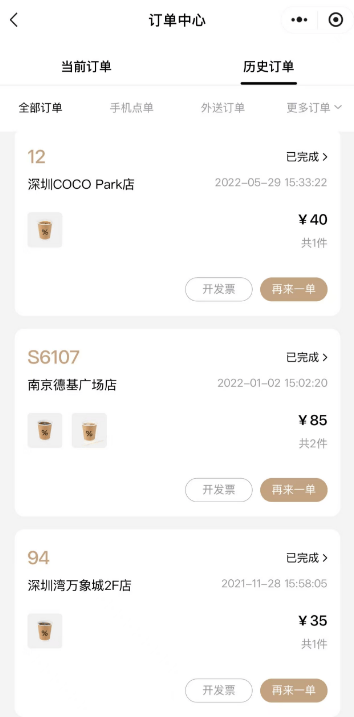
China’s coffee consumption growth slows

Luckin Coffee, the largest coffee chain in China, posted 1.2% company-owned same-store sales growth for 4q25, which is weak.

During earnings call, Luckin says China’s coffee market is still in a rapid growing phase – is that so?

I think there is still room, but current “coffee intensity” is already like in a mature stage.

Starbucks reward members (35mn) consume 3-5 cups per month.

Luckin members consumes close to 342mn cups per month in 2025 (4.1bn cups annually) and close to 100mn monthly transacting consumers, which translate to over 3 cups per customer per month approximately.

Why there is still room (but may be hard to penetrate)?

1) Luckin’s 450mn customer base means there could be 1.5x to 2x room in China, excluding children and elderly.

2) If Starbucks can get 16k stores in US, Luckin may get up to 4x of that which is over 60k stores in China, or 2x from current 30k stores.

3) Starbucks Reward member is an underestimation of active consumers of Starbucks, which could be like 70-90mn. 4x of that gives you 210-360mn potential which is 2-3x from current 100mn for Luckin.

Why hard to penetrate?

1) lower-hanging fruit / easy regions already have footprint.

2) China has more “layers” of consumers; thus hard to have one-size-fit-all offering. There are more competitions in China. Can’t handle price sensitive and premium customers together.

When gov requires buyback vs when gov buys you back

When gov requires buyback

When gov invest money as LP, the GP usually requires investees to buy back after say 5 years, with annual rate of up to 8%.

The equity investment is essentially a 5-year convertible loan that carries interest rate.

If things go well, gov should never lose money on these investments.

When gov buys you back

In rare cases, gov may promise to buy you back – e.g. Shenzhen gov promises to buyback 保障性配售住房, it applies an annual discount of 1% or more.

You will earn a negative interest rate annually.