Chinese AI may be good at agentic tasks, but…

In 2024, OpenAI talked about five levels of AI.

  1. Chatbot/Conversational AI
  2. Reasoners
  3. Agents
  4. Innovators
  5. Organizations

We are at level 3.

Chinese AI could be good or superb in the second and third level.

Chinese people are good at solving problems (think about exams) and doing tasks (think about how efficient Chinese workers can be at repetitive work ).

However, if Chinese AI needs to at level 4 and 5, and if it’s truly “Chinese”, then Chinese people need to evolve.

True innovation is scarce in China. Chinese society currently doesn’t reward true innovation. It’s like “solving news problems with new ways”. That is not the natural motivation. Chinese AI may stuck at level 3 if we don’t do innovation right.

It’s another problem at level 5. Most Chinese people don’t know how to organize themselves.

So it’s hard for me to see how Chinese AI can do this right either.

They may struggle for a while.

Or they might become a different animal.

The memory shock to investing

The explosive rise in memory prices has profound impact.

One is in investing and valuation framework – you now have several memory names (like SK Hynix, Micron, SanDisk) that is trading at single-digit or 10x current year P/E with expected high earning growth into the future.

And these companies are large enough to absorb tons of capital.

The indirect impact? Other companies’ valuation now looks absurd!

The previously dirty cheap companies lose investors. For 10x P/E, you can buy memory names with much stronger growth!

If the only reason to long is undervalued, then it becomes harder to justify the buy.

Additionally, those companies with reasonable moat, single digit growth, 20-30x p/e also lose – 2-3x PEG looks absurd now.

This hits many consumer or healthcare names.

No delta, no acceleration in growth = no interest.

Focus on OPEX

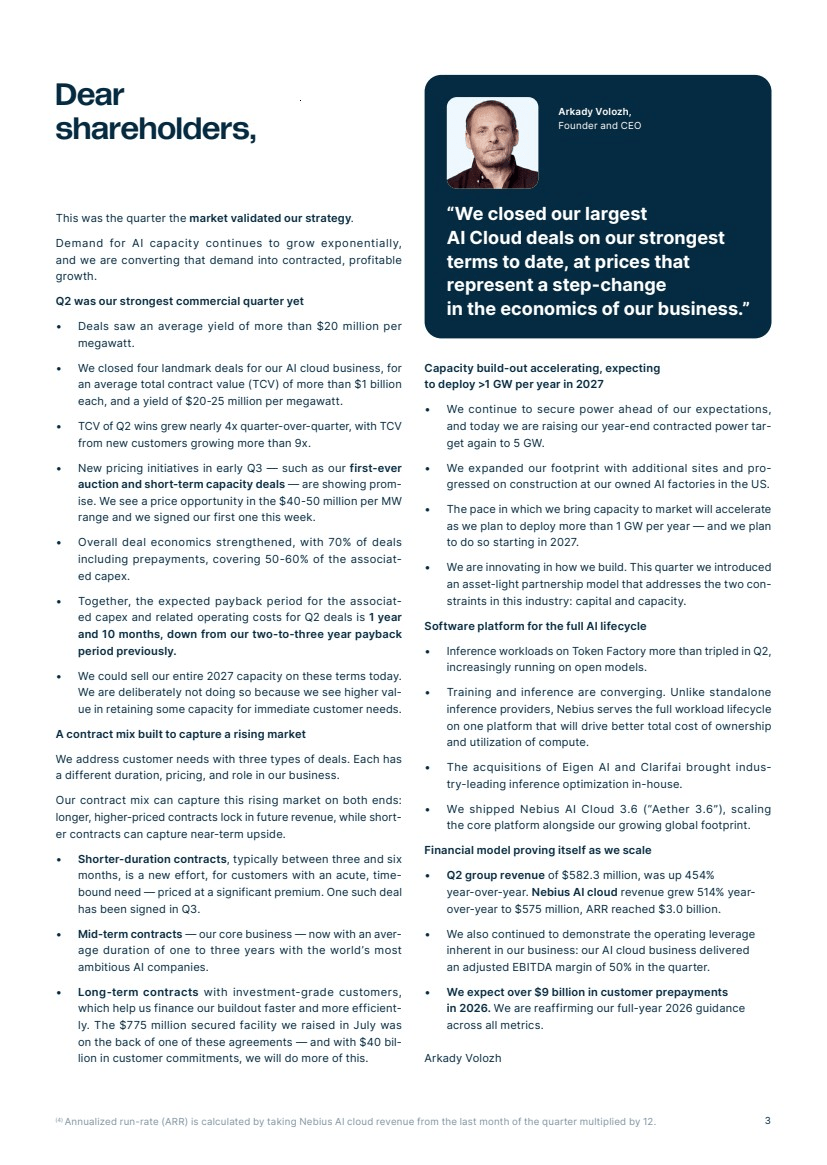
While the last few years AI investments are correlated with companies’ capex, I think the next stage is to focus on opex.

As customers of LLMs and agents, how many tokens are consumed and what is the cost of that? That will show up in operating expenses.

This will be supportive evidence of strong revenue growth for companies like Anthropic etc., just like looking at Meta’s capex comments for Nvidia’s revenue growth.

The 5-year cycle in China investing

Every five years, China will have a new Politburo Standing Committee.

There are 7 members now, which are considered the most politically powerful people in China.

Not all members are new, some can stay for 2-3 term.

But the fight for becoming a new standing committee member can be quite intense.

There can be ripple effects across other areas in China.

Stock market can be quite sensitive to unknowns and turbulence.

To avoid uncertainties, it’s wise to stay away from it.

To compensate for staying on the sideline for about one year, the previous year can be quite a good year.

That seems to the case for the last 2 terms – 2017 and 2022 were the year of new committee selection. The “fight” could start in 2016 and 2021. Thus the “good” years were 2015 and 2020.

The next term is 2027. The “fight” could start in 2026 and 2025 was the good year. That seems to be the case so far.


PE multiple

PE multiple is not only a reflection of earnings quality, earnings growth/cagr, etc.

It’s also an encouragement or discouragement for value creation.

If $1 of profit is worth 10x in HK and 50x in A-share, companies could be more encouraged to create more value for A-share shareholders.

The same rationale also applies to upstream or downstream players – PE multiple can influence whether revenue or profit should sit more or less in supplier or customer etc.

Japan before Meiji vs Qing Dynasty

Japan before Meiji vs Qing Dynasty have many similarities:

1/ both are agrarian based economy that is not industrialized as western peers at the time

2/ both faced challenges and threats from the west. Qing has the Opium Wars from the 1840s; Japan encountered Perry’s Black Ships in 1853–1854.

3/ both had a structured military class – Qing with 八旗 and Japan with samurai. Both had become partly hereditary status groups living on state stipends. Many were no longer effective soldiers.

The Meiji Restoration 明治维新 and 百日维新 Wuxu Reform / The Hundred Days Reform are similar and usually compared together.

The results are vastly different though.

Why?

Shogunate is politically easy to target. Reformers can support the Emperor Meji. Meji and Tokugawa are separate.

However, Guangxu, the Qing Emperor had “invisible enemies” inside – Cixi or other Manchu noble.

The political situation difference had another profound impact – the support of armies.

Meji had key army support from Satsuma 萨摩, Chōshū 长洲 which are clearly anti-shogunate.

Guangxu didn’t have army. Guangxu had Kang Youwei who had ideas but no real power.

Military forces at that time were still loyal to the Qing court on the surface. Whether it’s 袁世凯 or 湘军/曾国藩 or 八旗, no one is clearly anti-Cixi. People could be dissatisfied but Cixi was still the powerful core of Qing court.

Yuan was likely the most possible choice for Guangxu back then, but Yuan chose not the take the risk / help a coup etc.

Yuan Shikai 袁世凯 did not have a clean, rightful banner to be openly anti-Cixi.

Two support for US stocks

What gives you comfort in keeping US equity?

Trump put is not something everyone can accept.

Fed put is less certain if war keeps inflation high.

What else?

Buffett put – Berkshire’s massive cash position to support any big dip.

SpaceX/OpenAI IPO put – world’s wealthiest people/investors won’t let market close for their pay day.

Labubu adjusted P/E

In a previous post, I said unpredictability is what Pop Mart investors must shoulder, but is there any number that can make investors slightly more comfortable?

Let’s try Labubu adjusted P/E and we need Labubu adjusted earnings.

Labubu (The Monsters IP from Pop Mart) revenue was over 14 billion rmb in 2025.

The other “good” IPs were about 3 billion rmb revenue.

We can assume there is 10 billion “extra” revenue that Labubu is earnings.

We can also assume Pop Mart’s marginal operating profit margin is 50%. Then the “extra” operating profit is ~5 billion rmb.

Subtract that from 2025 operating income will give you about 12bn rmb in Labubu adjusted operating profit.

With 25% tax rate, Labubu adjusted earnings is about 9bn rmb.

At 150 HKD per share, Pop Mart is at ~20x Labubu adjusted P/E.

Unpredictability is what Pop Mart investors must shoulder

Pop Mart stock plunged after earnings – down 23% on Wednesday and down 10% on Thursday.

Pop Mart’s forecast of 20% or so rev growth in 2026 is lower than what is expected and is a sharp decline after 185% growth in revenue in 2025.

Labubu is still one of the hottest fashion toy IP worldwide with no competitors I think.

However, investors can’t reliably forecast future rev and thus cash flows of Pop Mart as nobody knows whether Labubu can sustain its mojo / for how long and how far.

Unpredictability is usually a negative thing, but people disregarded it as a risk when Labubu was in rapid growth mode. The “upside” unpredictability blinds investors – they liked it actually.

Now if you really want to be an investor in Pop Mart, you need to be comfortable with this inherent unpredictability.

One way to think about this is that Pop Mart is ultimately a very good channel like Tencent. Whatever it incubates and sells, its stores will sell them well. Pop Mart stores are the product of Pop Mart, alongside the IPs like Labubu.

However, to say Pop Mart stores is like WeChat is too much a compliment for Pop Mart so far. Network effect that is so strong and unique that WeChat really doesn’t have a competitor.